A sample text widget
Etiam pulvinar consectetur dolor sed malesuada. Ut convallis
euismod dolor nec pretium. Nunc ut tristique massa.
Nam sodales mi vitae dolor ullamcorper et vulputate enim accumsan.
Morbi orci magna, tincidunt vitae molestie nec, molestie at mi. Nulla nulla lorem,
suscipit in posuere in, interdum non magna.
|
Of course and in Bulgaria on overdue payments may be charged interest rate. How can we determine these rates? Is there a formula?
Statutory interest base rate is due when the debtor is in default. Bulgarian law determines when the debtor has fallen into default. It is different for the various types of commitments.
When the day of the commitment is given, the debtor is in default after its expiration. But if that day has passed after the death of the debtor, his heirs fall in default after 7 days of invitation.
If no day of execution the debtor is in default after being invited by the creditor.
In the tort liability of the debtor shall be deemed in default and without invitation.
European law also establishes other deadlines in the fight on combating late payment in commercial transactions – DIRECTIVE 2011/7/EU OF THE EUROPEAN PARLIAMENT AND OF THE COUNCIL. There is stated:
1. Member States shall ensure that, in commercial transactions between undertakings, the creditor is entitled to interest for late payment without the necessity of a reminder, where the following conditions are satisfied:
(a) the creditor has fulfilled its contractual and legal obligations; and
(b) the creditor has not received the amount due on time, unless the debtor is not responsible for the delay.
2. Member States shall ensure that the applicable reference rate:
(a) for the first semester of the year concerned shall be the rate in force on 1 January of that year;
(b) for the second semester of the year concerned shall be the rate in force on 1 July of that year.
3. Where the conditions set out in paragraph 1 are satisfied, Member States shall ensure the following:
(a) that the creditor is entitled to interest for late payment from the day following the date or the end of the period for payment fixed in the contract;
(b) where the date or period for payment is not fixed in the contract, that the creditor is entitled to interest for late payment upon the expiry of any of the following time limits:
(i) 30 calendar days following the date of receipt by the debtor of the invoice or an equivalent request for payment;
(ii) where the date of the receipt of the invoice or the equivalent request for payment is uncertain, 30 calendar days after the date of receipt of the goods or services;
(iii) where the debtor receives the invoice or the equivalent request for payment earlier than the goods or the services, 30 calendar days after the date of the receipt of the goods or services;
(iv) where a procedure of acceptance or verification, by which the conformity of the goods or services with the contract is to be ascertained, is provided for by statute or in the contract and if the debtor receives the invoice or the equivalent request for payment earlier or on the date on which such acceptance or verification takes place, 30 calendar days after that date.
Since Bulgaria is not yet accepted in the Euro zone is applicable the following rule – for a Member State whose currency is not the euro, the equivalent rate set by its national central bank;
The statutory interest on overdue payments in Bulgarian Lev and foreign currency in Bulgaria is determined by the Council of Ministers Decree.
Determined by the annual rate of statutory interest for overdue payments as
follows:
BGN – the base rate of the Bulgarian National Bank for the period plus 10 points;
In convertible currency – the three-month LIBOR for the respective currency plus 10 points.
The daily amount of statutory interest for overdue payments is equal to 1/360 part of the annual amount.
Check Base Interest Rate by Bulgarian National Bank
This article has been recently updated and published on December 4, 2025, on our new web page under the title Statutory Interest in Bulgaria (Updated End 2025 Guide)
 Coat of arms of Republic of Bulgaria
This matter is regulated by the Bulgarian Citizenship Act as the law defines the terms and conditions for the acquisition, loss and restoration of Bulgarian citizenship.
Bulgarian citizenship shall be governed also by the Constitution of the Republic of Bulgaria by law and by international treaties in force at the onset of the facts or events related to citizenship.
Bulgarian citizen who is a citizen of another country are considered only Bulgarian citizens in the implementation of the Bulgarian legislation, unless the law provides otherwise.
There are three possibilities for obtaining Bulgarian citizenship:
1. Acquisition of Bulgarian citizenship by origin
– Bulgarian citizen by origin each of whom at least one parent is a Bulgarian citizen.
– Bulgarian citizen by origin is and any person who is fathered by a Bulgarian citizen or originating from a Bulgarian citizen has been established by judicial decision.
2. Acquisition of Bulgarian citizenship by birth
– Bulgarian citizen by birth shell be any person born in the Republic of Bulgaria, if not entitled to citizenship of origin.
– It is considered born on the territory of Bulgaria child found on this territory, whose parents are unknown.
3. Acquisition of Bulgarian citizenship by naturalization
A person who is not a Bulgarian citizen may acquire Bulgarian citizenship if on a date of filing the application for naturalization:
– is an adult – at least 18 years old
– not later than 5 years has been given permission to reside in Bulgaria
– has not been convicted of a crime of general character of the Bulgarian court against him and not prosecuted for such offense unless rehabilitated
– has income or occupation, which enables him to withstand in Bulgaria
– speak Bulgarian, which establishes a procedure established by the Minister of Education and Science and
– is released from their citizenship or will be released from it at the time of acquisition of Bulgarian citizenship
A person who is not a Bulgarian citizen, meets the requirements of Art. 12, item 1, 3, 4, 5 and 6 and not less than 3 years from the date of application for naturalization has obtained permission for permanent residence in Bulgaria can acquire Bulgarian citizenship if they meet the one of the following:
– not less than three years has continued to be legally married to a Bulgarian citizen
– was born in Bulgaria
– permit for permanent residence is received before coming of age 18 years old
A person granted refugee status or asylum before no less than three years from the date of filing the application for naturalization may acquire Bulgarian citizenship if they meet the requirements of Art. 12, item 1, 3, 4 and 5.
A person granted humanitarian status not later than five years from the date of filing the application for naturalization may acquire Bulgarian citizenship if they meet the requirements of Art. 12, item 1, 3, 4 and 5.
Stateless person can acquire Bulgarian citizenship if they meet the requirements of Art. 12, item 1, 3, 4 and 5 and not less than three years of the date of filing the application for naturalization has a permanent residence in Bulgaria.
A person who is not a Bulgarian citizen may acquire Bulgarian citizenship through naturalization, without any conditions under Art. 12, item 2, 4, 5 and 6 if it meets one of the following requirements:
– is of Bulgarian origin
– is adopted by a Bulgarian citizen under conditions of full adoption;
– one of his parents is a Bulgarian citizen or has died as a Bulgarian citizen.
A person who is not a Bulgarian citizen may acquire Bulgarian citizenship without the conditions of Art. 12, if the Republic of Bulgaria is interested in naturalization or if the person has special merits to the Republic of Bulgaria in public and economic sphere, in science, technology, culture and sport.
Children under 14 years of age shall acquire Bulgarian citizenship if their parents or living accept Bulgarian citizenship or if only one of their parents do so if the other is a Bulgarian citizen. Under the same conditions of children 14 – to 18 years of age shall acquire Bulgarian citizenship if they so wish.
Our Immigration lawyers can help you in your intention. Feel free to send us your inquiry.
 A credit card, the biggest beneficiary of the Marquette Bank decision (Photo credit: Wikipedia) Belcheva & Associates Law Office offers worldwide debt collection, but as close to the debtor as possible. Per country and per region, Belcheva & Associates Law Office is locally connected to debt collection specialists to support you in your international debt collection.
Combining the knowledge of national laws and requirements together with regional debtor knowledge, will guarantee you maximum result in international debt collection.
We attorneys at Belcheva & Associates Law Office believe international debt collection should be as transparent as possible. Upfront you will know your costs involved in collecting your debt, based upon a No Collection, No Fee structure. No upfront costs and/or hidden costs. Fully transparent, as international debt collection should be. Moreover, this financial structure guarantees you maximum results, as both parties have a mutual interest in collecting your debts.
Although our aim is to collect your open debts amicably, sometimes litigation is unavoidable to collect your debts. Please note you will take full advantage of the knowledge and financial agreements our partners have with instigating legal procedures. Of course you will be informed first about the assessment of the case and the financial implications before any legal actions are started.
Contact us to discuss on how we can solve your debts.
See in addition what we can do to support your business:
Professional and cost effective local Business Representation optimising your ability to win new business and retain existing business.
To help these companies and business people seeking first-class business consultancy and representation in Bulgaria, we provide a wide array of services such as:
- Market research and Sales development
- Market Entry – search for Business Partners /Affiliations /Distributors /Buyers /Agents
- Access to an established business network and contacts in FMCG and B2B industries which include traditional and modern trade (National accounts)
- Negotiating and managing contracts
- Product launches and Market tests on regional/national basis
- Field Sales ? Preselling, Merchandising, Trade promotions, Sales reports
- Marketing support: business listing, local advertising , mass mailing or/and telemarketing
- Mystery shopper
- Business Presence Support: Secretarial , Human Resources and accounting services as well as Customer billing, follow-up and collecting
- Lead generation
- Events Support: Trade Shows / Exhibitions / Business meetings / Sampling
We will prepare your Trade Show for maximum impact to increase your productivity.
We will target potential buyers and will follow-up with them to turn them into business partners. Activity plan will be tailored to your budget and business needs.
In the preliminary agreement the parties undertake to enter into another contract in the future. Preliminary contract may precede the conclusion of various agreements the most often used to arrange the sale of real estate.
Typically a preliminary contract is concluded when the parties need a longer time period to be bound by the final, for security in the civil turnover and legal reality.
Because of an explicit legal prohibition or because of their specific features, the conclusion of certain contracts may be agreed by preliminary contract – these are real, grants, interim agreements and those concluded with a view of individual parties. The preliminary contract must meet the general requirements, unless these preliminary contract must contain provisions concerning the the essential terms of final contract.
The purpose of the particular requirement is preliminary contract to include enough specific data on intention of the parties to the parameters of the forthcoming relationship which to enabling the court to declare the decision to replace the final contract. Furthermore, stipulations regarding the essential terms of the final contract a preliminary contract, being preparatory to the promise final agreement on the need to include provisions on its conclusion – for example, within which should be concluded, obligations of the parties in preparation (gathering the necessary documents, removal of existing barriers) and others.
The preliminary agreement is generally informal, with the exception of cases in which it agreed with the conclusion of a contract that requires a notary or a notarized form – then the written form is a requirement for the validity of the preliminary contract. So the format for the preliminary contract depends on its intended final contract form of validity.
Although the law does not place the written form as a condition for the validity of the preliminary contracts are agreed with the conclusion of a contract which does not require a notary or a notarized form, it appears necessary because of its special preparatory function. The opportunity to ask preliminary contract to be declared final by the court imposes the need for clarity on the parties agreed parameters of forthcoming contracts. The oral form of the preliminary agreement would require the demonstration of reservations made on the essential terms of the final contract to rely on witness evidence because these arrangements will need to be reproduced in the judgment. Besides the risk of inaccurate reproduction of the preliminary contract clauses witness statements may be inadmissible and thus make it impossible to determine the content of the preliminary agreement by the court.
By its legal nature preliminary contract is an agreement whereby the parties agree on essential terms of the other final contract whose conclusion must follow a certain period, the occurrence of certain circumstances or conditions.
From the definition of the preliminary contract is that it is a bond and bilateral – each of the parties involved are required to conclude a final agreement in the future and the right to require the same from the other side.
With the preliminary contract is created a mutual obligation to take out another contract – final.
The preliminary agreement which agreed the sale of an asset doesn’t have a proprietary effect – it does not transfer ownership or limited real rights on it but an obligation for parties to sign a final contract of sale. Moreover – upon signing the preliminary contract of sale need not party shall transfer any right to the owner. In these cases, the preliminary agreement, it undertakes to acquire this right, then forward it to the other side. However, possession, surrendered on the basis of the preliminary contract shall enjoy enhanced legal protection. Without a bona fide possessor acquired possession on the basis of preliminary contract shall enjoy the rights namely:
– Is entitled to the enjoyment of the property and obtain yields that it has given to bringing an action for its return;
– Can ask for the improvements made??, the amount by which the increased value of the property as a result of these improvements
– May request to be paid for the necessary expenditures made ??for the preservation of the property;
– Has the right to hold property until payment of the improvements and the costs.
Bulgarian Competition Law is designed to protect and foster competition and free enterprise in economic activity. Over the years the law was repeatedly changed by the legislature to meet the requirements of economic life.
Bulgarian Competition law provides protection against agreements, decisions and concerted practices, abuse of monopolistic and dominant and all other acts and actions that can lead to the prevention, restriction or distortion of competition in the country and / or affect trade between Member – States the European Union as well as unfair competition. The Act regulates the control of concentrations between undertakings. This law regulates relations concerning the application of Art. 81 and 82 of the Treaty establishing the European Community including cooperation with the European Commission and national competition authorities of the Member – States of the European Union under Regulation (EC) 1/2003 of 16 December 2002 on the implementation of the rules on competition laid down in Art. 81 and 82 of the Treaty establishing the European Community, hereinafter referred to as “Regulation (EC) 1/2003 ‘, and Regulation (EC) 139/2004 of 20 January 2004 on the control of concentrations between undertakings (Merger Regulation EC), hereinafter “Regulation (EC) 139/2004.”
Bulgarian Competition Act shall apply to:
– undertakings and associations of undertakings which operate in the Republic of Bulgaria or abroad, unless expressly or tacitly prevent, restrict, distort or may prevent, restrict or distort competition in the country;
– state bodies, including executive authorities and local government, if they expressly or tacitly prevent, restrict, distort or may prevent, restrict or distort competition in the country;
– undertakings to which the state or municipality is assigned to perform the services of public interest, insofar as the application of the law is not law or in fact the tasks assigned to them, and competition in the country is not affected significantly;
– individuals who commit or facilitate the commission of an offense under this Act.
The Act created the Commission for Protection of Competition. The Commission is the national body of the Republic of Bulgaria, responsible for the implementation of Community law on competition.
The Act prohibits any agreements between undertakings, decisions by associations of undertakings and concerted practices of two or more undertakings which have as their object or effect the prevention, restriction or distortion of competition in the market, such as:
– directly or indirectly fixing prices or other trading conditions;
– share markets or sources of supply;
– limit or control production, marketing, technical development or investment.
– applying dissimilar conditions to identical contracts to certain partners, thereby placing them at a competitive disadvantage;
– making the conclusion of contracts subject to acceptance by the other parties of supplementary obligations or additional contracts which by their nature or according to commercial usage have no connection with the subject of the main contract or its performance.
It is forbidden to conduct businesses with monopoly or dominant position as well two or more undertakings of dominant position, which may prevent, restrict or distort competition and affect the interests of consumers, such as:
– directly or indirectly imposing prices for the purchase or sale or other unfair trading conditions;
– limiting production, trade and technical development to the prejudice of consumers;
– applying dissimilar conditions to identical contracts to certain partners, thereby placing them at a competitive disadvantage;
– making the conclusion of contracts subject to acceptance by the other parties of supplementary obligations or entering into additional contracts which by their nature or according to commercial usage have no connection with the subject of the main contract or its performance;
– unreasonable failure to supply goods or provide service to real or potential client to hinder the attainment of its business.
The Act prohibited any act or omission in the course of business which is contrary to good commercial practice and harms or may harm the interests of competitors.
Shall be prohibited to damage the reputation and credibility of the competitors and their products or services by stating or disseminating untrue information, as well as by presenting the facts in a distorted form. Shall be prohibited to mislead in relation to essential characteristics of goods or services on or use of the goods or the provision of services by alleging false statements or misrepresenting facts.
It bans misleading and unlawful comparative advertising.
Advertiser and advertising agency prepared the ad, are liable for misleading and unlawful comparative advertising.
The offering of goods or services, appearance, packaging, marking, name or other characteristics which mislead or might mislead as to the origin, producer, seller, manner and place of manufacture, source and manner of acquisition or use quantity, quality, nature, consumer characteristics and other essential characteristics of the product or service is prohibited.
LIABILITY AND PENALTIES
For breaking the law are provided penalties, some of which are:
– Commission imposed a penalty of up to 10 per cent of total turnover for the previous financial year of an undertaking or association of undertakings
– Individuals contributed to the performance of violations under the Act if the act constitutes a crime shall be punished with fine from 500 to 50 000 BGN.
If you believe that your rights under this Act have been violated please contact us. We are ready to help you.
Franchising is one of the most popular business models in present days. There is almost no business area in which it is not affected by franchising.
In franchising one person – a franchisor, grants to another – a franchisee the right to use its owned industrial property – trademark, logo, design, patented invention or utility model, industrial experience (know-how) and so etc., and shall render organizational, technical, marketing, etc. Support for their effective operation in return of remuneration and commitment by the franchisee to follow prescribed by him commercial policy and adhere to strictly imposed unilaterally by the market the franchisor’s own standards.
Franchising is a combination of industrial property rights or intellectual property rights relating to trademarks, trade names, logotypes, models, designs, copyright, know-how or patents granted for remuneration to be used for the sale of goods and / or provision of services.
Franchise agreement may include the granting of a license on industrial property, sale, lease, contract manufacturing, etc. and as such it directly to the legal requirements applicable to each of these contracts.
Upon signing and execution of a franchise agreement applicable to common ground rules and the rules of the Competition Legislation.
There are several forms of franchising by the type of activity.
Production franchising – franchisee is entitled to produce the goods supplied using his know-how, trade marks, industrial experience, trademarks, patents, etc.
Outlets franchising – franchisee can only distribute the goods produced by the franchisor, franchising services – franchisee is entitled to perform the services of the franchisor.
Parties to the franchising most often are companies, consortium, cooperatives, etc., without any restriction on the type of subjects or their legal form in which may have formed.
With the diversity in practice the names of those parties now has become the terminology: franchisor – the party that owns intellectual property and manufacturing experience, technical and organizational knowledge has created a range of customer and franchisee – the party that receives the opportunity to use this, due consideration and shall comply with industrial and economic requirements.
Each of the agreements included in the content of the franchise agreement should be concluded within the prescribed legal form.
The selection of international jurisdiction in any future disputes in the contract, as far as their preference for judicial review, the court recommended the selection rules (ie again in the absence of choice – a court whose jurisdiction is the territory in which agreed use of the extended franchise).
Inclusion of an arbitration clause is recommended.
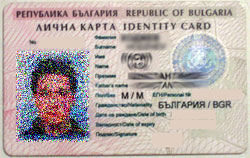 Bulgarian ID card (Photo credit: Wikipedia) The purpose of this post is to examine conditions and procedures for issuance of Bulgarian identity documents for foreign nationals and stateless persons from the Ministry of Interior, and the prerequisites for the replacement of these documents. Regulation is contained in several Bulgarian laws namely:
Bulgarian ID act.
Rules for issuance of Bulgarian ID documents act.
Tariff of fees.
Foreigners who are granted Bulgarian identity documents as laid down in this proceeding are:
– foreigners residing in Bulgaria for a period exceeding 3 months
– stateless persons
Ministry of the Interior issued the following documents for foreigners:
– ID card to continuous residing foreigner in Bulgaria – issued to foreigners admitted to reside within one year
– ID card to permanent resident foreigners in Bulgaria
– certificate for traveling abroad of a stateless person
– temporary ID card – foreigners whose national documents were seized in the cases provided by law
ID Card of a foreigner continuous residing in Bulgaria is valid for 1 year. The validity of the card permanent resident foreigner also depends on the validity of national passport, which he is entered in Bulgaria. Bulgarian identity document is issued to any alien who has been authorized stay beyond three months, which is over 14 years. Identity documents for travel abroad shall be issued to persons under 14 years of age.
Bulgarian identity documents to foreigners are issued and replaced upon submission of application form. Application forms can be found by the regional offices of the Ministry of Interior for a fee – 1 BGN=0,50 Euro.
There are other documents required for submission with application form.
For issuance card of long-term residing and permanent resident foreigner in the Republic of Bulgaria collected state fee is 10 BGN ~ 5 euro
For a certificate for traveling abroad to a stateless person and the provisional certificate for leaving the Republic of Bulgaria collected state fee is 30 BGN ~ 15 euro
For issuing a temporary card for foreign nationals collected fee is 10 lev ~ 5 euro
There are no fees for foreigners who are exempt on the basis of reciprocity and international agreements to which Bulgaria is a party.
Exempt from payment of fees are and foreigners who can not present their old Bulgarian identity document because it is forcibly taken away, damaged or destroyed beyond the holder’s reasons, such as natural disasters, accidents, accidents, robbery and rendering emergency medical care, those reasons shall be established by documents issued by competent authorities.
The issue of identity documents for minors and under partial guardianship are to be made in person, and for minors and placed prodigals – through their legal representatives.
In application, the applicant shall personally signed in the presence of an official.
In cases where a person may not appear in person to sign the application, it shall make his signature at a notary in advance and in person on the face of the application. Then the application is filed by a person authorized by the applicant.
Once the official accepts regular application filed in the registry and it completed and delivered to the applicant accordingly adopted application receipt.
Application data is checked in the the information databases associated with Bulgarian identity documents in accordance identity documents are issued within 30 days of receipt of the application are received by the applicant.
Issued identity document shall be received personally by the applicant after completing the appropriate section for receiving the application and return to the previous identification of this kind, if he was issued one.
Bulgarian identity document of a foreigner shall be valid in the Republic of Bulgaria together with his national travel document.
Nobody has the right to give and accept a pledge, use and dispose Bulgarian identity document of another person.
If you need more detailed information please contact us. Our Bulgarian lawyers will be happy to assist you.
National courts cannot force social networks to monitor for copyright infringement by users because it would not strike a “fair balance” between the rights of rights holders and the rights of those platforms and its users, the European Court of Justice (ECJ) has ruled.
The ECJ assessed EU laws on copyright and the enforcement of intellectual property rights as well as laws on the liability of service providers, data protection and privacy in communications. It also weighed the fundamental rights to the protection of intellectual property against the rights to privacy, free speech, the freedom to conduct business, and protection of personal data. It said that, on balance, it would be unfair if courts could force social networks to monitor for illegal file-sharing.
“[EU laws] read together and construed in the light of the requirements stemming from the protection of the applicable fundamental rights, must be interpreted as precluding a national court from issuing an injunction against a hosting service provider which requires it to install a system for filtering … with a view to preventing those works from being made available to the public in breach of copyright,” the ECJ ruling said.
The ruling was prompted by a national court case in Belgium involving music royalties collecting society Sabam and social network platform Netlog. Sabam has claimed that Netlog users were sharing copyrighted music and videos on the site without permission. Sabam said Netlog should have to pay a fee or “give an undertaking to cease and desist from making available to the public musical and audio-visual works from SABAM’s repertoire without the necessary authorisation,” the ECJ’s ruling said.
In 2009 Sabam asked the Court of First Instance in Brussels to issue an injunction to force Netlog to stop the infringement happening and said it should have to pay €1,000 as a penalty each day that Netlog delayed its compliance with the order. Netlog argued that such an injunction would have been “tantamount to imposing on Netlog a general obligation to monitor” user behaviour and said that that was contrary to Belgian national law.
The social network operators also argued that the injunction could force it to introduce a filtering system to identify and prevent illegal file-sharing. Such a system “would have to satisfy the provisions of EU law relating to the protection of personal data and the confidentiality of communications,” Netlog had argued.
Brussels asked the ECJ whether EU law and the fundamental rights to privacy and freedom of expression allowed national courts to issue injunctions to impose such a filtering system.
In a separate case also involving Sabam last year the ECJ also ruled that courts could not issue injunctions to force internet service providers to monitor for copyright infringement.
The EU’s Copyright Directive says copyright owners can obtain a court order against intermediaries whose services are used for piracy. But the E-Commerce Directive says that those intermediaries are generally not responsible for the activity of customers and that member states must not put them under any obligation to police illegal activity on its service.
Under EU data protection laws personal data must be “processed fairly and lawfully” and be collected for “specified, explicit and legitimate purposes and not further processed in a way incompatible with those purposes”. The laws also state that information can only be processed if a person has given their unambiguous consent and if that consent is explicitly given.
Separate EU laws set out in the EU’s Privacy and Electronic Communications Directive also state that storing and accessing information on users’ computers is generally only lawful “on condition that the subscriber or user concerned has given his or her consent, having been provided with clear and comprehensive information … about the purposes of the processing”.
Under the EU Charter of Fundamental Rights individuals generally have a right to privacy and protection of personal data. The Charter also confers rights on free speech, the freedom to conduct business and states that intellectual property (IP) “shall be protected”. The ECJ said, however, that there was “nothing whatsoever” in the way the Charter was worded or in ECJ case law to suggest that the fundamental right to the protection of IP is “inviolable and must for that reason be absolutely protected”.
It said that filtering system would have unfairly affected Netlog’s ability to conduct its business because it would have involved the platform “monitoring all or most of the information” it stored.
“That monitoring has no limitation in time, is directed at all future infringements and is intended to protect not only existing works, but also works that have not yet been created at the time when the system is introduced,” it said. “Accordingly, such an injunction would result in a serious infringement of the freedom of the hosting service provider to conduct its business since it would require that hosting service provider to install a complicated, costly, permanent computer system at its own expense, which would also be contrary to the conditions laid down in [the EU’s Enforcement of Intellectual Property Rights Directive], which requires that measures to ensure the respect of intellectual-property rights should not be unnecessarily complicated or costly,” the ECJ ruling said.
“In those circumstances, it must be held that the injunction to install the contested filtering system is to be regarded as not respecting the requirement that a fair balance be struck between, on the one hand, the protection of the intellectual-property right enjoyed by copyright holders, and, on the other hand, that of the freedom to conduct business enjoyed by operators such as hosting service providers,” it said.
The ECJ said that the rights of users of social networks would also affected by any monitoring for copyright infringement and that therefore those rights also had to be taken into account. It said that because the filtering system “would involve the identification, systematic analysis and processing of information connected with the profiles created on the social network by its users” the monitoring of information could infringe on those individuals’ rights to the protection of their personal data.
The filtering system may not be able to distinguish between lawful and unlawful content it could result in lawful content being blocked. Because of this the system could also impinge on individuals’ rights to freely impart or receive information, the ECJ said.
“Consequently, it must be held that, in adopting the injunction requiring the hosting service provider to install the contested filtering system, the national court concerned would not be respecting the requirement that a fair balance be struck between the right to intellectual property, on the one hand, and the freedom to conduct business, the right to protection of personal data and the freedom to receive or impart information, on the other,” the ECJ said.
Credits :
out-law.com
The three measures of Djankov will make a bank’s interests clearer not lower.
Linking interest rates only with SOFIBOR and YURIBOR will do interest more transparent, but is unlikely to reduce them.
The idea was launched yesterday by Deputy Prime Minister Simeon Djankov and provoked numerous comments financiers and experts.
Deputy Governor of BNB Rumen Simeonov is skeptical that the announced measures could lead to a reduction in lending rates, but acknowledges that it is more transparent.
“However, it dawned on me what is the reason banks in the country to set interest rates on loans compared to the one YURIBOR or SOFIBOR – when the Bulgarian banks are participating in this market, the risk allowance for them is much higher than for Western European banks,” he told in front at newspaper “Trud”.
Sounds a little strange intention of “separation of bank charges between the user and the bank” as Deputy Prime Minister Simeon Djankov stated. Perhaps he means putting a limit on the amount of fees implies Simeonov.
These plans sound nice, the question is how to put into practice and whether it will be too expensive and the banks and the public, said economist Georgi Ganev, according to whom “risk identification often can not fit into any formulas”.
According financier Lubomir Hristov lending rules should be changed so that the market becomes competitive: “After the 2010 unilateral changes in interest rates on loans have already raised in rank norm – (many of Bulgarian lawyers doesn’t share these views – related to increasing lawsuits against the banks). This is a definition of “reference rate” under the Consumer Credit Act in force since May 12, 2010 “reference rate” is that portion of the interest rate that can change during the loan repayment. It is the law index, which may be a market, but can be determined and “methodology” of the bank. “He told in front newspaper” Trud “.
The analysis of “active users” shows that 15 of the 18 banks using their own “methodology” recalls Christopher, adding: “The exact amount of the bank’s reference rate is decided each month by the Governing Council ie randomly. ” Which can be called exactly unilaterally raise or outside the contract.
Bankers say that these are political statements that sound good but in practice it is not clear how to obtain, summarize the “Standard”. Most requests are associated with many legislative changes, changes in regulations and ordinances. Once government have a majority in parliament, why not change the laws as they want, ask the banks. They say that for the most of the measures sought no legal impediment to apply, the problem is that the economic situation and the market are not responsive to such action.
“An encouragement of investment, consumption, employment, can do much more work than any restrictions on the banking sector and specific changes in banking laws,” commented for “Trud” Petar Andronov, CEO and Chairman of Assembly of EIBank.
Used Materials from dir.bg.
|
|


